Frank Donald Stacey (1929 - 2026)
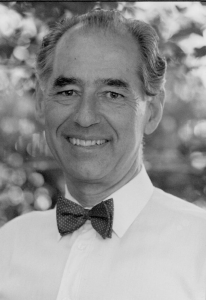
Frank Donald Stacey passed away peacefully on the morning of June 24, 2026. We knew him as a loving family man, a gifted physicist, a person of unshakeable integrity, and a scientist who fiercely challenged widely accepted paradigms. He entered geophysics in the 1950s, when plate tectonics was not yet accepted and the modern synthesis of paleomagnetism, seafloor spreading, and magnetic anomalies had yet to emerge. Geophysics itself was still a young field. He came to be regarded as one of the grandfathers of modern geophysics. His textbook Physics of the Earth, first published in 1969, presented the whole solid Earth from a physicist’s point of view and became a foundational text for generations of geophysicists. The European Geosciences Union later described it as the first geophysics textbook to deal with the whole solid Earth in this way.
Frank was born in London in 1929. During World War II he was evacuated to the country, but after a year he returned to London to face the Blitz, attending high school with a gas mask. Influenced by his grandfather, a headmaster, he excelled at school and went on to earn a B.Sc. with Honours in physics in 1950 and a Ph.D. in 1953 from the University of London, followed by the award of a D.Sc. in 1968.
He and his wife, Joy, were married in 1953, a busy year in which, in addition, he obtained his PhD, and both left for his first job in Canada. Throughout their 73-year marriage, Joy was a constant source of support, contributing to Frank’s professional success and to the close family life they shared with their four children.
Frank was appointed a research fellow in physics at the University of British Columbia (1953–1956), followed by a fellowship in geophysics at the Australian National University (1956–1961). He then became Royal Society Gassiot Fellow in Geomagnetism at the Meteorological Office Research Unit in Cambridge (1961–1964).
In 1964 he was appointed Reader in Physics at the University of Queensland (UQ), becoming Professor of Applied Physics in 1971 and serving from 1979-1982 as department head. He remained at UQ until his retirement in 1991. He subsequently joined CSIRO as an Honorary Fellow, continuing fundamental geophysical research, particularly his equation of state and applications of thermodynamics to the Earth.
He was a sought-after visiting professor, making visits to UCLA, the Carnegie Institution’s DTM, Columbia University, the University of Western Ontario, Rice University, the University of British Columbia, and institutions in China and Japan. He served on the editorial boards of multiple journals and held leading roles in professional societies. Among these, he served as a member and executive member of IASPEI and chaired the IASPEI Commission on the Physical Properties and Processes in the Earth’s Interior from 1979 to 1983, continuing as a member from 1983 to 1987.
Frank’s honors included election as a Fellow of the Australian Academy of Science in 1979 and a Fellow of the American Geophysical Union in 1986, as well as receipt of the Louis Néel Medal of the European Geophysical Union in 1994 for his outstanding and original work in rock magnetism and on the thermal structure of Earth’s core and mantle.
Rock magnetism and paleomagnetism
In his 96 years, the breadth of Frank’s research accomplishments was broad enough to cover several careers. He was very much an experimental physicist and would tell his students that carefully obtained experimental data would stand the test of time: theories do not; a better one eventually comes along. This prophecy came true in some of his own theoretical work, although there remain notable exceptions.
His encyclopedic knowledge of physics made him a fearsome debater on geophysical issues where there was often more room for discussion than available supporting data. Yet when sufficient contradictory evidence emerged, he could become just as fierce in arguing the other side. He was not someone to approach with a “half-baked” argument.
In the 1950s, the emerging field of paleomagnetism depended on demonstrating that magnetization preserved in rocks could remain stable over geological time. This required a fundamental understanding of rock magnetism. The discovery of magnetic reversals and, subsequently, magnetic anomalies associated with oceanic ridges became crucial evidence in the eventual acceptance of plate tectonics. Frank’s training in geomagnetism at the University of London placed him in an ideal position to take up this challenge.
His work over more than a decade in rock magnetism was summarized in his 1963 paper, “The Physical Theory of Rock Magnetism.” The paper reviewed the magnetic behavior of magnetite and hematite and discussed coercivity, susceptibility, magnetic viscosity, thermoremanence, anisotropy, piezomagnetic effects, and self-reversals.
It appeared in the same year that Vine and Matthews published their paradigm- changing work on magnetic anomalies over oceanic ridges. The European Geophysical Union’s citation when awarding the Louis Néel Medal specifically credits him wit developing a theory of thermoremanence in multidomain grains and introducing the concept of pseudo-single-domain (PSD) behavior.
Frank extended Louis Néel’s single-domain theory after carrying out numerous experiments on rocks. In 1962 he published a generalized theory of thermoremanence covering the transition from single-domain to multidomain grains. He proposed that stable remanent magnetization, previously difficult to explain in larger multidomain grains, could also occur through an intermediate type of behavior in small multidomain grains called pseudo-single-domain behavior.
Frank’s work emphasized the role of domain structure defects, and Barkhausen processes in the stability of remanent magnetization. Later micromagnetic work developed different physical descriptions of PSD behavior, including vortex structures. The important point is that Frank identified the existence and significance of this intermediate magnetic regime decades before the modern computational tools used to investigate it became available.
His magnetic studies also helped demonstrate that some meteorites contained stable thermoremanent magnetization, suggesting that associated asteroids had once possessed core dynamos.
Frank’s understanding of magnetostriction in rock magnetism led him to recognize that stress-induced changes in crustal magnetization could be used to identify changes in stress occurring prior to, and during, eruptions and earthquakes in volcanic and seismic zones. Combined with strain measurements, these observations could potentially reveal changes in elastic and anelastic strain energy associated with different physical aspects of volcanic eruptions and earthquakes. He coined the term tectonomagnetic effects, encompassing seismomagnetic and volcanomagnetic effects. This remains an active field of research. His 1963 review already included piezomagnetic effects among the important problems of rock magnetism.
Precision measurements and earthquake prediction
Along with his interest in the physics of earthquake and volcanic prediction, Frank developed a tiltmeter using capacitance micrometry. The instrument was patented in the United States and could measure extremely small tilts. The capacitance measurement mechanism could detect extraordinarily small displacements (1 Angstrom) and was also used to investigate magnetostrictive strain in rocks and strain hysteresis during rock deformation.
One of his students subsequently used this technology to develop a borehole tensor strainmeter that has been used in tectonic regions worldwide.
The deep Earth and equations of state
During visits to different research institutes, he collaborated on theoretical estimates of core thermal and electrical conductivity, the Grüneisen parameter, mantle and core convection, geodynamics, and earthquake prediction.
Frank recognized that the Lindemann melting law, although successful at relatively low pressures, was less satisfactory at the extreme pressures found deep within Earth. He modified Lindemann’s law using an equation of state involving the Grüneisen parameter. This became known as the Lindemann–Stacey scaling law and was subsequently applied to deep-mantle and core properties and, later, by other researchers to exoplanetary interiors.
Seismology provided information about bulk modulus, K, and density deep within Earth at pressures far higher than those readily attainable in the laboratory. Frank therefore developed equations of state that could use these seismological observations to obtain temperature and related thermodynamic parameters at high pressure.
He showed that the Preliminary Reference Earth Model (PREM), with its smooth variations in K and density, could not simply be used as a thermodynamically consistent equation of state because its pressure derivatives, K′, did not behave in a manner consistent with a physically acceptable high-pressure extrapolation.
He also examined conventional equations of state developed by Birch, Murnaghan, Vinet, and Rydberg, arguing that equations that fit pressure-volume data over a limited range could nevertheless produce problematic behavior in their higher derivatives when extrapolated to extreme pressures.
Frank recognized the importance of the finite limiting value of K′ at infinite pressure, an idea that had first been identified in Keane’s 1953 equation of state. He developed an alternative formulation in which the reciprocal of K′ varies linearly with P/K. This became known as the Stacey reciprocal-K′ equation of state. The modern literature explicitly distinguishes Stacey’s reciprocal-K′ formulation from Keane’s equation while recognizing their close relationship.
The Stacey formulation has subsequently been widely discussed and applied in high- pressure physics. Studies comparing Keane’s and Stacey’s equations show that both provide thermodynamically meaningful behavior at infinite pressure, while differing in their higher derivatives.
These developments became important in modeling planetary interiors. Stacey’s equations of state have been applied to planetary and exoplanetary interiors, including calculations extending to planets up to ten times the mass of Earth.
The search for a fifth force
In the mid-1980s, suggestions appeared in the literature that Newton’s inverse-square law of gravity might depend on scale, implying a possible “fifth force.” Reanalysis of the 1922 Eötvös experiment by Ephraim Fischbach and colleagues in 1986 suggested a possible correlation between measurements of G and the baryon number of the materials used, raising the possibility of a non-Newtonian force.
Measurements of G made in the Cavendish tradition were generally conducted at laboratory scales, involving dimensions of roughly a meter and masses comparable to cannonballs. Frank asked whether a fifth force might become observable if measurements were made on kilometer scales. He designed experiments to test this possibility.
His most famous experiments involved gravity measurements at depth in a mine at Mount Isa, Australia. The mining company had measured density through multiple boreholes, while gravity surveys had been conducted at the surface. It was therefore possible to compare the observed change in gravity with depth, on kilometer scales, with the change predicted by Newtonian gravity.
A series of papers emerged suggesting positive results, with the important caveat that the conclusions depended critically on accurate knowledge of the density distribution. Frank eventually concluded that systematic errors had prevailed and acknowledged that the density corrections had been inadequate.
Earth as a Cradle for Life
In his later years at CSIRO, Frank increasingly studied environmental and planetary questions. His book The Earth as a Cradle for Life: The Origin, Evolution and Future of the Environment, written with Jane H. Hodgkinson and published by World Scientific in 2013, again challenged established paradigms.
They argued that the high surface temperature of Venus might not be adequately described simply as a runaway greenhouse effect, emphasizing instead the role of thermal convection in Venus’s extraordinarily dense atmosphere. They questioned whether “greenhouse effect” is an appropriate description when atmospheric heating in an actual greenhouse is considered primarily due to heating trapped air isolated from outside convection rather than simply the trapping of infrared radiation.
They also drew attention to the role of noctilucent clouds in atmospheric heat exchange and suggested that their significance had been underestimated. They proposed that nonbiological sources of oxygen may have played a larger role in Earth’s history than is generally assumed.
The book reflected Frank’s growing concern for the environment, grounded in his preference for geophysical calculations and basic physical principles. He expressed reservations about the efficacy of using tides, rather than wind or solar power, as a major source of clean energy, and he also questioned the ultimate effectiveness of carbon-dioxide sequestration.
An enduring scientific philosophy
Frank Stacey was adept at challenging paradigms by drawing on his exceptionally broad knowledge of physics to construct counterarguments. He was skeptical of conclusions emerging from massive computer programs or unnecessarily complex theories, preferring basic physical arguments supported by data, often accompanied by a one-line equation.
He did not believe that an asteroid caused the extinction of the dinosaurs, preferring volcanic explanations. He was not convinced by the impact theory for the origin of the Moon. For the proposed late heavy bombardment of the Moon, he favored tidal effects on moonlets crashing into the Moon rather than a planet-wide bombardment.
He continued to question aspects of Newtonian gravity and never completely ruled out the possibility of a fifth force, advocating better geophysical experiments to test it. He also suggested that Kelvin’s pre-radioactivity estimate of the age of Earth—roughly 100 times too small—would have been supported by a similarly underestimated pre- radioactivity estimate of the age of the Sun.
Frank was an iconoclast who refused to join scientific bandwagons. Yet his skepticism was not simply contrarianism. His enduring philosophy was to challenge conventional wisdom, to change one’s mind when the evidence demanded it, and, when proven wrong, to acknowledge the error and demonstrate how the science could be improved.
When he realized that his fifth-force experiments did not have sufficient accuracy, he gave an unusually candid appraisal at a seminar at UCLA that this author attended. He said:
“It is worse if you fall down if you have never stood up.”
Frank had stood up many times. He was right often enough to stand very tall. When he was wrong, his response exemplified the scientific integrity that characterized his life.
He leaves behind a cherished memory, a remarkable scientific legacy, and an influence that will continue to live on through the many students, colleagues, family members, and friends whose lives he touched.
Paul Davis, UCLA