Eystein Sverre Husebye (1937 - 2025)
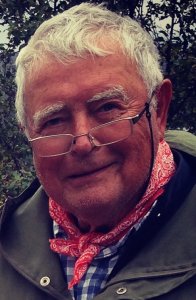
Prof. Eystein S. Husebye, born on 9 th February 1937 in Fauske, Norway, passed away on 10 th November 2025 in his hometown of Bergen, Norway. ESH, as he was often called, started his career with MSc degrees in geophysics at the University of Bergen in 1962 and at the University of Uppsala in 1966, followed up by PhD degrees at Uppsala in 1972 and the University of Oslo in 1976.
ESH’s scientific employments started with the University of Bergen, 1962 – 1968, with part of that time spent at the University of Uppsala, then he was a Postdoc at MIT, 1966-1968, and after that he was employed at NORSAR between 1968 and 1993. During his NORSAR years he was also adjunct professor 1979 – 1990 at the University of Oslo. His final employment was as professor at the University of Bergen, 1993 – 2007.
When the large NORSAR array was built (with US funding) at the end of the 1960s it was a unique observatory that was paralleled only by the LASA array in Montana. In contrast to LASA, however, funding at NORSAR covered not only operational costs but also a research group that during a pioneering decade in the 1970s provided significant scientific contributions to a variety of seismological problems. The initial scientific staff at NORSAR comprised, besides ESH, Ole Steinert, Frode Ringdal and Hilmar Bungum. ESH’s contributions as Chief Seismologist were particularly valuable, as he organized research projects and invited experts in the field to come to NORSAR and work with the staff for extended periods of time. NORSAR was organized as an institute under the Research Council of Norway, and their scholarship program provided essential support for these efforts. Among the invitees were scientists from the USA, the Soviet Union, Germany, the other Scandinavian countries, and many more. It is noteworthy here that NORSAR was an open research institute, allowing for example Russian visitors to work with data from both Russian and US nuclear explosions, in the middle of the cold war.
The data from the NORSAR array provided for the use of new analysis methods as well as for new research topics within Earth structure and dynamics, and ESH dived into all of this with enthusiasm and energy, often in cooperation with colleagues from many counties and continents. Among the research topics covered during these years were seismic precursors (to PP, P’P’ and PKIKP), seismic wave scattering (mantle and core- mantle boundary), large-scale mantle inhomogeneities, P-wave jointly interpreted time and amplitude anomalies, and seismicity and seismotectonics. The one topic with the deepest scientific footprints, however, was on large-array determination of 3- dimensional lithospheric structure, in cooperation with K. Aki and A. Christoffersson (with nearly 1000 citations).
During the 1980s, with a venue mostly at the University of Oslo, ESH moved on scientifically from his large-array focus to a diversity of other geophysical subjects and study areas, and with new co-workers. His topics now included crustal thicknesses in Fennoscandia, P-wave mantle velocity anomalies, upper mantle heterogeneities, tomographic lithospheric mapping, crustal structure (also in Polar regions), and the Oslo Rift zone.
During the 1990s and later, ESH made a final venue shift, this time to the University of Bergen, and with new co-workers again. His topics now included more crustal and upper mantle studies, mostly in Fennoscandian and surrounding regions, including Skagerrak, entailing both reflection and refraction surveys, surface wave studies, and with a return also to seismic tomography. During these years ESH also published papers on seismological topics such as 3-component analysis, earthquake detection and location, historical earthquakes, and seismic discrimination.
On a more applied and political level, ESH also contributed significantly. An opportunity to bring NORSAR’s research into the diplomatic/political environment came in 1976 with the Geneva Conference of Disarmament’s establishment of the Group of Scientific Experts (GSE). The group issued over its 20 years’ lifetime reports that described how seismology could be used to facilitate the verification of a future comprehensive nuclear test ban. The group designed, installed and tested a global network of seismic stations to verify its concepts. Based on the research at NORSAR, ESH and colleagues presented in the GSE more than 100 scientific papers of relevance to numerous aspects of a future global monitoring system. In the negotiations in Geneva during 1994 – 1996 on a nuclear test ban (the CTBT), the diplomats adopted GSE’s design as a blueprint for the seismological component of the CTBT’s verification system. This system shows clear signs of NORSAR’s research achievements over the years.
More information on ESH’s scientific contributions are available from Clarivate’s Web of Science (or from Scopus or Google Scholar). Eystein S. Husebye was an elected member since 1987 of the Norwegian Academy of Science and Letters.
Hilmar Bungum, Svein Mykkeltveit, Tormod Kværna, former colleagues at NORSAR.